

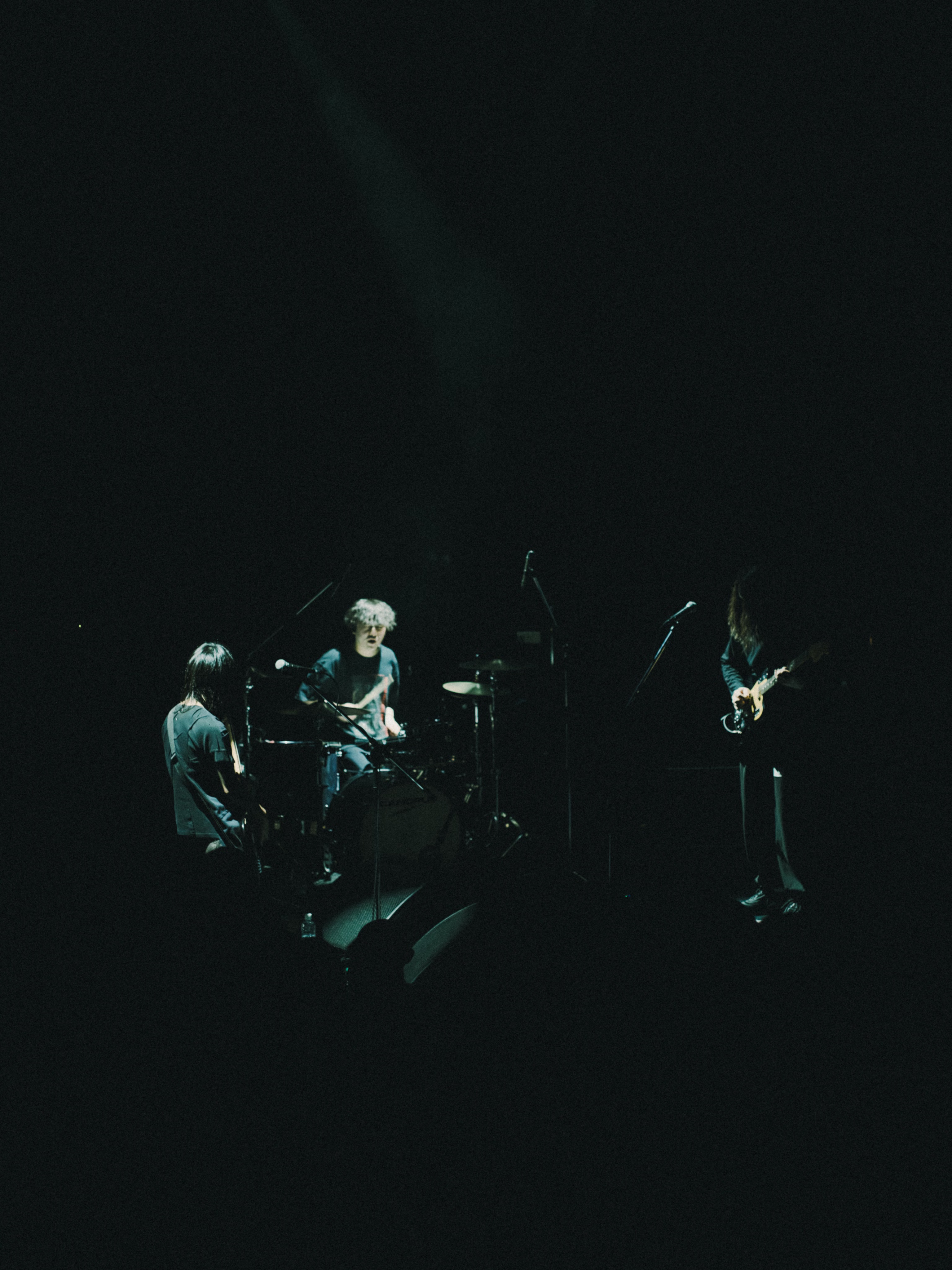
Around the end of 2019, I ordered a four-way split called Two, mostly for the Asunojokei song. What took me by surprise, was the band on the second track, a band that was new to me. That band was nhomme, and their track channeled the vibes of 3cm Tour but ratcheted the complexity and intensity beyond anything before.
I quickly found their EP from 2017, 鬱糸, but the trail ran dry there. There was also a global pandemic bringing most music to a standstill worldwide, so I couldn’t find out much at the time.
Then in 2022, while I was recording a podcast with Dave from Zegema Beach Records, he dropped a complete bomb on me (you can hear my live reaction at 22:20 of track 3). He was planning to release a brand-spanking new EP from the group.
The leap on this EP from the band’s previous work is astonishing. Truthfully, I felt like nhomme’s previous work marked them as a really excellent screamo group, but the 一種の過音 EP establishes them as a singular force in Japanese music.
After listening to the EP over and over and over and over again, I finally had to reach out to the band and find out more.
Note: This interview took a long time to pull together (my fault), so keep in mind some of these questions were asked a year ago.
インタビューは日本語原文で以下に掲載されています。
Check out nhomme on the internet:
Regarding the Band
How was nhomme formed?
It started around 2012 when I was approached by Yoneya, who was a junior of mine at university. Yoneya and I were in the same cover band club in college. Later, he introduced me to Abe, his junior from high school, and after jamming together once in the studio, we formed nhomme.
At the time, I had been deeply impacted by Raein and was writing songs on my own, but I didn’t have a band to express them with, so I was feeling pretty stuck. It felt like perfect timing—exactly what I needed.
What do you hope to achieve with the band?
We don’t have any concrete goals, but if I had to say, I’d hope we can become a one-of-a-kind band like 54-71—something truly unique that people will continue to talk about for a long time.
Also, just as I was influenced by others, I’d be happy if nhomme inspires someone else to create new forms of expression.
nhomme had a support guitarist for a while. Has the lineup solidified?
Yoneya actually left shortly after we formed in 2012, and for several years after that we had a different guitarist playing with us. But in 2024, Yoneya rejoined as an official member, so now all three of us are full members.
I like three-piece bands, so for now we don’t have any plans to change this lineup.
How did the band fare during COVID?
It’s not like we were able to focus on creating music more than usual—we just ended up playing fewer shows and going into the studio less often.
Each nhomme song has a unique sound and is musically complex. What is your typical process for writing new songs?
I basically write all of the songs myself. Since 一種の過音 (“A Kind of Overtone”), I usually start by coming up with a concept. Then I create rhythm patterns and guitar riffs that fit that concept in parallel, and finally I combine and refine them into a complete song.
I use a free program called Tux Guitar for composition, and after sharing the score with the other members, we go into the studio.
Regarding the EP
It has been several years since your last release. When did you start writing the songs for 一種の過音?
一種の過音 i was the first song completed for this EP, and that was around 2017, so I’d say that’s when it started. I’m slow at writing songs, so the final release ended up being in 2023.
How did the release through Zegema Beach Records come about?
After finishing three songs from 一種の過音, we were discussing recording schedules as a band when, by chance, Dave from ZBR contacted us (I think via Bandcamp), saying he’d like to help if we were planning a release. That’s how it happened.
On the new EP, each track feels like part of a larger whole. How did you come up with that concept?
After finishing 一種の過音 i, I realized I could develop more songs from the ideas in that track, and that led me to the concept of the 一種の過音 EP.
That’s why all three songs share the same title. The numbering—i, ii, iii—simply reflects the order in which they were written.
Are the lyrics for each song also connected?
All three songs focus on the act of “creating” itself. The lyrics approach it from various angles—sometimes abstract, sometimes critical—engaging with the process of creation in different ways.
Since I put into words what I think about when making music, they naturally ended up being connected.
In the packaging for the EP, there’s a section labeled “Ref” that lists songs by other artists. Some seem like influences, while others feel directly referenced (for example, the opening of Ryoji Ikeda’s “1’11’” closely resembles the opening guitar riff of “iii”). Why did you include these, and what do you want listeners to take from them?
This “Ref” sheet—or rather, the “list of works that influenced the creation of 一種の過音”—serves as a kind of commentary on the EP. You could even call it self-written liner notes.
I want to convey what kind of music I listen to, what influences I’ve absorbed, and what I was aiming for in creating 一種の過音. But to explain that fully, I would have to put into words many things that I haven’t yet been able to articulate, which is very difficult for me.
So I thought that by presenting the works that influenced me, I could communicate those ideas indirectly, which is why I compiled the list.
There are actually other works that influenced me that aren’t included, but there simply wasn’t enough space to talk about them all.
The EP seems to have been very well received both in Japan and abroad. How do you feel about that response?
I’m really grateful. It seems like a lot of people discovered nhomme through this release, so I’m glad we made it. I’d love to play shows overseas someday.
バンドについて
nhommeはどのように結成されましたか?
2012年ごろ、大学の後輩だったヨネヤに声を掛けられたことがきっかけです。ヨネヤとは大学のコピーバンドサークルで一緒でした。その後、ヨネヤの高校の後輩であるアベを紹介してもらい、スタジオで一度セッションしたのちにnhommeを結成しました。
当時私はRaeinに衝撃を受け、一人で曲を作っていたもののそれを表現するバンドがなく悶々としている状態であったので渡りに船という感じでした。
バンドで何を達成したいと願っていますか?
具体的な目標はありませんがしいて言うなら、54-71のように唯一無二で、長く語り継がれるバンドになれたらいいなと思っています。
また、私がそうであったように、nhommeというバンドを踏まえて新しい表現をする人が現れたらいいなと思います。
nhommeにはサポートギタリストもいますが、永久メンバーは2人だけのようです。将来的にメンバーを追加したいと思いますか、それともこの編成を好まれますか?
2012年にバンドを結成した後すぐヨネヤは脱退し、その後数年間は別のギタリストがギターを弾いていましたが、2024年に再び正式メンバーとしてヨネヤが加入し、現在は3人全員が正式メンバーとなっています。
3ピースバンドが好きなのでこの編成を変える予定は今のところありません。
バンドの活動は、コロナ禍の間はどのような状況でしたか?
制作に集中できたということも特になく、ただただライブとスタジオに入る回数が減りました。
nhommeのそれぞれの曲は独特のサウンドがあり、また非常に音楽的に複雑です。新しい曲を書く際の典型的なプロセスは何ですか?
基本的に楽曲は全て私が作っています。一種の過音以降は、まずコンセプトを考えたら、そのコンセプトにあうリズムパターンとギターリフを並行して作成し、それら両方をすり合わせて最終的に曲にしています。
作曲にはTux Guitarというフリーソフトを用い、譜面をメンバーに共有した後、スタジオに入っています。
EPについて
前回の作品からかなりの年月が経っています。新しいEPのための曲を作り始めたのはいつですか?
このEPの中で一種の過音ⅰが最初にできた曲なのですが、2017年ごろにできた曲なので、それくらいの時期ということになるかと思います。私は曲を作るのが遅いため、最終的なリリースは2023年になってしまいました。
Zegema Beach Recordsが新しいEPをリリースしましたが、それはどのように実現したのですか?
一種の過音が3曲完成した後、レコーディングの日程をメンバーと話し合っているタイミングで、たまたまZBRのDaveから(確か)Bandcamp経由でリリースの予定があれば手伝いたいという旨の連絡をもらったことがきっかけです。
新しいEPでは、それぞれの曲が大きな全体の一部となっています。このコンセプトをどのように考案しましたか?
一種の過音ⅰができた後、一種の過音ⅰで思いついたアイディアでもっと曲が作れるのではと気づき、一種の過音EPという構想を思いつきました。
曲名が3曲とも同じなのは上記が理由です。ⅰ、ⅱ、ⅲというナンバリングは曲ができた順に割り振っています。
それぞれの曲の歌詞の内容も、このコンセプトと関連していますか?
曲の歌詞は3曲とも「制作すること」それ自体にスポットを当てています。抽象的だったり批判的だったり、あらゆる角度から制作することに向き合った歌詞となっています。楽曲を作るときに考えていることを歌詞に落とし込んだので、おのずと関連したものになっていると思います。
新しいEPで、「Ref」という見出しの下に他のバンドの曲をリストしています。これらの中には影響を受けたものもあれば、曲から参照しているように見えるものもあります(例えば、池田亮司の「1’11’」の冒頭が、新しいEPの「iii」の冒頭のギターリフに酷似しています)。これらの曲をリリースに記載した理由と、人々に何を感じてもらいたいのですか?
この「Ref」シート、もとい「一種の過音を作るにあたって影響を受けた作品リスト」は一種の過音の解説文です。セルフライナーノーツといってもいいかもしれません。私には「私がどのような音楽を聴き、どのようなものに影響を受け、どのようなことを志向して一種の過音を制作したのか」を伝えたいという思いがあります。しかしそれを語るには、自分の中の言語化できていない部分を多く言語化しなければなりません。私にとって非常に難しい作業です。しかし、影響を受けた作品を公開することでそれらを語ることができるのではないかと思い、リスト化することにしました。
リストに含まれていないものの影響を受けた作品は他にもいくつかあるのですが、それを語るには余白が少なすぎました。
新しいEPについて、日本国内外でたくさんの良い印象があるようです。その印象についてどう思いますか?
すごくありがたいです。この作品でnhommeを知ってくれた人が多いみたいで、作ってよかったなと思っています。いつか海外でもライブをしたいです。